 By Saurav Mehra
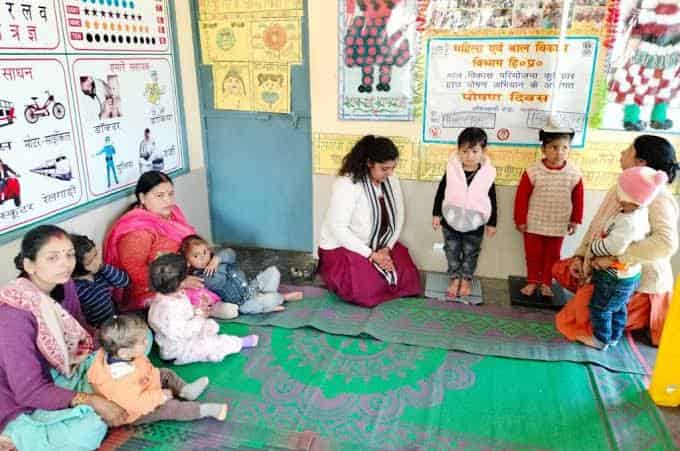
 The Anganwadi worker is the most grassroots-level frontline functionary in India’s social welfare architecture — the community health, nutrition, and early childhood development worker who operates from a single Anganwadi centre serving 40 to 80 children and their mothers within a village or urban ward. Deployed under the Integrated Child Development Services (ICDS) scheme — now integrated into the Poshan 2.0 programme under the Ministry of Women and Child Development — Anganwadi Workers (AWW) and Anganwadi Helpers (AWH) form the primary interface between the government’s nutrition and maternal health programmes and India’s most vulnerable communities.
Understanding Anganwadi salary requires a critical distinction upfront: Anganwadi Workers and Helpers are not central or state government employees in the conventional sense. They are honorary workers engaged on an honorarium-based contractual framework — not covered under 7th Pay Commission pay scales, not eligible for standard government pension, and historically among the most underpaid frontline workers in India’s public health and welfare system. The Supreme Court, multiple central pay commissions, and state governments have all weighed in on improving their compensation — and 2026 represents one of the more improved positions in the history of this workforce.
Anganwadi Salary 2026: Quick Overview
| Category | Central Honorarium | State Top-Up (Avg) | Effective Monthly |
| Anganwadi Worker (AWW) | ₹4,500 per month | ₹3,000 – ₹8,000 | ₹7,500 – ₹12,500 |
| Mini Anganwadi Worker | ₹3,500 per month | ₹2,000 – ₹5,000 | ₹5,500 – ₹8,500 |
| Anganwadi Helper (AWH) | ₹2,250 per month | ₹1,500 – ₹4,000 | ₹3,750 – ₹6,250 |
| Anganwadi Supervisor | ₹20,000 – ₹35,000 | State-specific | ₹28,000 – ₹42,000 |
The Honorarium Structure: How Anganwadi Pay Actually Works
Unlike government employees who receive a monthly salary with DA, HRA, and allowances under a formal pay matrix, Anganwadi Workers receive a monthly honorarium — a fixed payment recognising their service rather than a salary for employment. This distinction has significant financial and legal implications:
No PF or NPS: Anganwadi Workers are not covered under EPF or NPS at the central level. Some states have introduced state-specific savings schemes but these are not universal.
No formal pension: The Government of India does not provide a monthly pension to Anganwadi Workers after retirement. The PMMVY (Pradhan Mantri Matru Vandana Yojana) and state insurance schemes provide limited coverage.
No HRA or DA in the traditional sense: The honorarium is a flat amount — not broken into basic, DA, HRA components.
State-level top-ups are critical: The central government’s ICDS honorarium is the floor — most states add their own monthly top-up that often exceeds the central honorarium. The effective monthly income depends almost entirely on which state the Anganwadi Worker serves in.
Central Government Honorarium 2026
The Ministry of Women and Child Development has fixed the following central honoraria under Poshan 2.0:
| Category | Monthly Central Honorarium |
| Anganwadi Worker (AWW) | ₹4,500 |
| Mini Anganwadi Worker | ₹3,500 |
| Anganwadi Helper (AWH) | ₹2,250 |
These rates represent the central government’s contribution toward AWW/AWH compensation. States are expected to contribute additionally — and the actual effective pay depends on state government budgets and policy decisions.
State-Wise Anganwadi Salary 2026
The most important salary variable for any Anganwadi Worker is the state government’s additional honorarium or salary revision:
| State | AWW Effective Monthly | AWH Effective Monthly |
| Kerala | ₹12,000 – ₹15,000 | ₹7,000 – ₹9,000 |
| Maharashtra | ₹10,000 – ₹14,000 | ₹6,000 – ₹8,000 |
| Tamil Nadu | ₹9,000 – ₹12,000 | ₹5,500 – ₹7,500 |
| Karnataka | ₹9,000 – ₹12,000 | ₹5,000 – ₹7,000 |
| Delhi | ₹9,639 (announced 2025) | ₹4,839 |
| Punjab | ₹9,000 – ₹11,000 | ₹5,000 – ₹6,500 |
| Rajasthan | ₹8,500 – ₹10,000 | ₹4,500 – ₹6,000 |
| Uttar Pradesh | ₹7,500 – ₹9,000 | ₹3,750 – ₹5,000 |
| Madhya Pradesh | ₹7,500 – ₹9,000 | ₹3,750 – ₹5,000 |
| Bihar | ₹7,000 – ₹8,500 | ₹3,500 – ₹4,500 |
| Jharkhand | ₹6,500 – ₹8,000 | ₹3,250 – ₹4,500 |
| West Bengal | ₹8,000 – ₹10,000 | ₹4,500 – ₹6,000 |
Kerala, Maharashtra, and Tamil Nadu consistently pay the highest effective Anganwadi salaries in India — reflecting the higher state fiscal capacity and stronger labour advocacy in these states. Bihar and Jharkhand pay the least, with effective compensation barely above the central honorarium floor.
Additional Components and Incentives
Beyond the monthly honorarium, Anganwadi Workers receive several programme-specific incentives:
Incentive for Institutional Delivery — AWWs who motivate expectant mothers to deliver at hospitals and health institutions receive ₹200 to ₹500 per institutional delivery facilitated.
Immunisation Incentive — For ensuring 100 percent immunisation coverage in their Anganwadi area — typically ₹150 to ₹300 per month.
Poshan Abhiyaan Incentive — Under Poshan 2.0, AWWs who achieve specific nutrition outcome targets (reduction in stunting, wasting, low birth weight, anaemia) receive additional incentive payments.
ECCE (Early Childhood Care and Education) Incentive — AWWs with ECE certification who conduct structured pre-school activities receive additional monthly or annual incentives.
Smart Phone / Tablet Data Allowance — Under the Poshan Tracker digital monitoring initiative, AWWs receive government-issued smartphones and monthly data reimbursement of ₹200 to ₹500.
Uniform Allowance — An annual uniform allowance of ₹2,000 to ₹3,000 for official saree/uniform maintenance.
Anganwadi Supervisor Salary 2026
The Anganwadi Supervisor (also called Child Development Project Officer Assistant or CDPO Assistant in some states) supervises 20 to 25 Anganwadi centres — a significantly better-paid position than AWW or AWH:
| Sector | Basic Pay | Monthly In-Hand |
| Central / State Government (Regular Supervisor) | Level 6 (₹35,400) | ₹48,000 – ₹58,000 |
| Contractual Supervisor (Most states) | Fixed pay | ₹20,000 – ₹35,000 |
Supervisors who are regularised as state government employees follow the 7th CPC pay matrix — basic ₹35,400 with full DA, HRA, and NPS pension. Contractual supervisors receive a fixed monthly salary varying by state.
Social Security Benefits for Anganwadi Workers
Several central and state schemes provide limited social security to AWWs and AWHs:
Insurance under Pradhan Mantri Jeevan Jyoti Bima Yojana (PMJJBY) — Life cover of ₹2 lakh at ₹330 annual premium — mandatory for AWWs in most states.
Accident Insurance under PMSBY — ₹2 lakh accidental death/disability coverage at ₹20 annual premium.
State Maternity Benefits — AWW and AWH are entitled to maternity leave in most states — typically 6 months with honorarium continuing.
Ex-Gratia on Death — Many states provide a lump sum ex-gratia of ₹1 lakh to ₹5 lakh to families of AWWs who die during service.
ESIC Coverage — Some states have extended ESIC (Employee State Insurance Corporation) coverage to Anganwadi Workers — providing hospitalisation benefits. Coverage is not universal.
Demands and Status of Regularisation 2026
The demand for regularisation of Anganwadi Workers as permanent government employees — with full salary, pension, and service benefits — has been one of the most persistent labour agitation issues in India. The Supreme Court has ruled in multiple cases that AWWs are not employees of the government and therefore not entitled to regular government pay — a position that the workers’ unions continue to challenge.
Several states — Kerala, Tamil Nadu, Maharashtra — have made more substantial financial improvements to AWW compensation than the central government’s floor rate. The central government’s revision of the honorarium from ₹3,000 to ₹4,500 (AWW) in recent years represents incremental improvement — but remains far below the minimum wage for semi-skilled workers in most states.
Conclusion
Anganwadi salary in India in 2026 — central honorarium of ₹4,500 per month for AWW and ₹2,250 for AWH, with state top-ups bringing effective monthly earnings to ₹7,500 to ₹15,000 depending on the state — remains one of the lowest compensation levels in any government-linked welfare programme. Kerala, Maharashtra, and Tamil Nadu pay the most. Bihar and Jharkhand pay the least. The honorarium-based rather than salary-based engagement framework continues to deny AWWs access to EPF, NPS pension, CGHS, and standard government service benefits. Anganwadi Supervisors as regular government employees earn ₹48,000 to ₹58,000 monthly — the aspirational career milestone for most AWWs.
FAQs
Q1. What is the Anganwadi Worker salary per month in 2026?
The central government honorarium is ₹4,500 per month. With state government top-ups, effective monthly income ranges from ₹7,000 to ₹8,500 in lower-paying states (Bihar, Jharkhand, MP) to ₹12,000 to ₹15,000 in higher-paying states (Kerala, Maharashtra).
Q2. What is the Anganwadi Helper salary per month?
Central honorarium: ₹2,250 per month. With state top-ups: ₹3,750 to ₹9,000 depending on state. Kerala and Maharashtra helpers earn the most; Bihar and UP helpers the least.
Q3. Is Anganwadi Worker a government job?
Not in the conventional sense. AWWs are honorary workers engaged under the ICDS/Poshan 2.0 scheme — not regular government employees. They do not receive 7th CPC salaries, EPF, NPS pension, or CGHS benefits. Some states are moving toward greater regularisation but this is not universal.
Q4. What is the Anganwadi Supervisor salary?
Regularised government Anganwadi Supervisors follow 7th CPC Level 6 — basic ₹35,400, in-hand ₹48,000 to ₹58,000. Contractual supervisors earn ₹20,000 to ₹35,000 depending on state.
Q5. Which state pays Anganwadi Workers the highest salary in India?
Kerala — with effective AWW monthly compensation of ₹12,000 to ₹15,000 — pays the highest. Maharashtra and Tamil Nadu follow at ₹10,000 to ₹14,000. Both states have significantly enhanced the central honorarium with state contributions and periodic revisions.