 By Saurav Mehra
A well-located office or warehouse can generate two to three times the rental income of a similarly priced residential apartment, yet residential properties still dominate India’s real estate market, largely because most buyers simply don’t realise how dramatically the two asset classes diverge on yield, risk, and liquidity. With commercial properties delivering gross rental yields of 6-12% against residential’s modest 2-5%, understanding exactly where each option genuinely wins matters considerably before committing lakhs, or crores, of your capital.
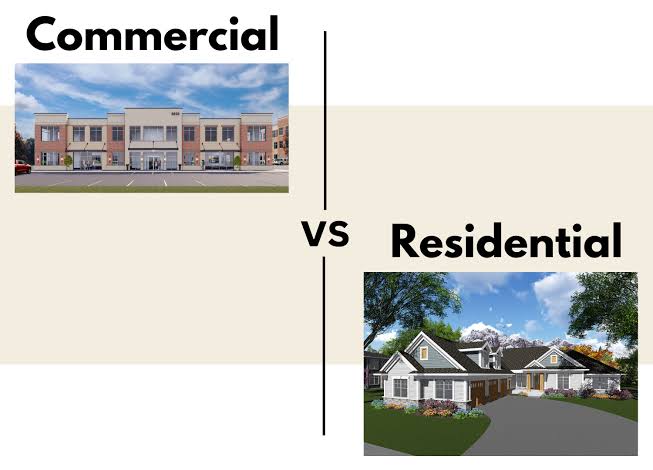
The Core Rental Yield Gap
- Residential properties typically deliver gross rental yields of 2-5% annually, with metro cities like Mumbai, Bangalore, and Delhi generally at the lower end (2-3%), while Tier 2 cities like Ahmedabad and Indore offer slightly better yields (3-4%).
- Commercial properties deliver considerably higher yields, generally 6-12%, with premium Grade-A offices in cities like Bangalore, Hyderabad, Gurgaon, and Noida often reaching 8-10%, and warehouse or logistics assets currently running 7-10% given India’s e-commerce boom.
- The reason for this gap is structural: commercial tenants pay considerably higher rents relative to property value, and lease terms run longer, giving landlords more predictable, escalating income over time.
- Anything above 10% yield is generally considered excellent for commercial property, typically found in high-demand logistics parks, warehouses, or retail spaces with strong footfall.
Capital Requirement and Entry Barriers
- Residential real estate carries considerably lower entry barriers, which is exactly why it dominates the Indian market and remains the go-to choice for buyers with medium to low risk tolerance.
- Commercial real estate demands a considerably larger initial investment, often requiring crores rather than lakhs for a genuinely institutional-grade property, putting it out of reach for many first-time investors.
- This capital gap alone explains why most retail investors gravitate toward residential property first, even though the yield math clearly favours commercial assets for those who can afford the entry ticket.
Risk and Volatility Differences
- Residential rental income tends to remain considerably more stable, since a renter requires only limited infrastructure and utilities, keeping operating costs lower and demand more consistent across economic cycles.
- Commercial rental value can drop significantly when the broader market slows, since businesses are more sensitive to economic downturns than individual households needing housing regardless of conditions.
- Commercial properties also carry genuine vacancy risk, since tenant turnover, though generally less frequent than residential, can leave a commercial unit empty for considerably longer stretches while a new business tenant is found.
- Residential leases are typically shorter, often 11 months to a few years, giving landlords more frequent opportunities to reset rent, but also creating more frequent tenant turnover and vacancy gaps to manage.
Capital Appreciation — Where Residential Often Wins
- Residential properties tend to appreciate steadily, driven by population growth and consistent housing demand, and this segment has historically delivered 15-35%+ appreciation in strong growth corridors.
- Commercial assets can experience genuinely rapid value increases specifically when located in developing business districts, but this appreciation is considerably more location-dependent and less broadly consistent than residential growth.
- The general industry framing puts it clearly: commercial wins decisively on yield and cash-flow certainty, while residential wins on long-term appreciation speed and broader tax benefits.
Tax Implications Worth Understanding
- Home loans for residential property offer meaningful tax deductions, up to ₹1.5 lakh on principal under Section 80C and up to ₹2 lakh on interest under Section 24(b), benefits not available in the same structured way for commercial property loans.
- Commercial property investors can typically claim depreciation and various business-related expense deductions instead, a genuinely different tax treatment suited more to investors treating the property as a business asset rather than a personal residence.
- This tax gap is a significant, often overlooked factor that shifts the effective, after-tax return comparison somewhat back in residential’s favour for buyers who qualify for the full home loan deduction benefits.
Management Complexity and Liquidity
- Residential properties are generally easier to manage, requiring less specialised oversight, and enjoy considerably better liquidity, since there’s a broader, more active pool of buyers and renters at any given time.
- Commercial properties demand more active management, lease negotiations, tenant quality assessment, and maintenance coordination, and typically take longer to sell given the smaller, more specialised pool of commercial buyers.
- For investors prioritising a genuinely passive, low-effort holding, residential property remains the more practical choice despite its lower yield ceiling.
Which Cities Currently Offer the Best Returns
- For residential rental income, Bengaluru, Hyderabad, Chennai, and Kolkata currently lead, benefiting from strong IT employment growth, infrastructure expansion, and metropolitan development.
- For commercial rental yield, Mumbai, Bangalore, Hyderabad, Pune, Delhi NCR, Chennai, and Ahmedabad remain the strongest-performing markets, with warehousing and logistics parks specifically standing out due to rapid e-commerce and manufacturing expansion.
- Noida and Lucknow are increasingly cited as offering a genuinely good balance between the two asset classes, worth considering if you want exposure to both yield and appreciation without picking one extreme.
When Residential Property Makes More Sense
- You’re a first-time investor with limited capital, since residential entry costs remain considerably more accessible than commercial.
- You want a genuinely passive investment requiring minimal active management and easier tenant turnover.
- You’re prioritising home loan tax benefits and steady, long-term capital appreciation over immediate cash flow.
- You value liquidity, since residential properties are generally easier and faster to sell if you need to exit your investment.
When Commercial Property Makes More Sense
- You’re specifically seeking strong, consistent rental income as your primary investment goal, rather than long-term appreciation.
- You have sufficient capital to meet commercial real estate’s considerably higher entry threshold.
- You’re comfortable with greater active management involved in lease negotiation, tenant quality assessment, and vacancy risk.
- You’re diversifying an existing residential-heavy portfolio and want exposure to the considerably higher 6-12% yield range commercial assets typically offer.
The Bottom Line
Residential and commercial property genuinely serve different investment goals rather than one being universally “better” than the other, commercial property delivers considerably stronger rental yields (6-12% versus residential’s 2-5%) and cash-flow certainty, while residential property offers lower entry barriers, easier management, better liquidity, and stronger tax benefits alongside steadier long-term appreciation. The smartest approach for most Indian investors is treating this as a portfolio allocation question rather than an either-or decision, starting with residential for accessibility and stability, then diversifying into commercial once you have sufficient capital and risk appetite to handle its higher yield, higher management complexity trade-off. This is general informational content, not personalised investment advice; consulting a real estate adviser or financial planner about your specific capital, risk tolerance, and goals remains genuinely worthwhile before committing to either asset class.
Frequently Asked Questions
Q1. Is commercial property genuinely always a better investment than residential given its higher rental yield?
A: Not necessarily, higher yield comes with genuinely greater risk, commercial rental value can drop significantly during economic slowdowns, vacancy periods tend to be longer, and the considerably higher entry capital required makes it less accessible and harder to diversify across multiple properties compared to residential.
Q2. How do I calculate whether a specific property is actually giving me a good rental yield?
A: Use the formula: ((Annual Rent minus Annual Expenses) divided by Property Value) multiplied by 100, this gives you the net yield, which reflects your actual returns after costs, rather than the gross yield alone which can look attractive on paper but overstate real profitability once maintenance and other expenses are factored in.
Q3. Can I get the same home loan tax benefits if I buy a commercial property instead of residential?
A: No, the Section 80C (₹1.5 lakh) and Section 24(b) (₹2 lakh) deductions specifically apply to residential home loans, while commercial property investors typically claim different benefits like depreciation and business expense deductions instead, making the tax treatment genuinely different between the two asset classes.
Q4. If I only have a moderate amount of capital, should I still consider commercial property at all?
A: For moderate capital, residential property generally remains the more practical starting point given its lower entry barrier and easier management, though some investors explore smaller commercial units like retail shops or co-working spaces as a middle-ground option once they’ve built sufficient capital and want to diversify beyond pure residential holdings.