 By Chetan Singh
 The position of Gram Pradhan — also called Sarpanch or Mukhiya depending on the state — is one of the most influential roles in rural India. A Gram Pradhan sits at the top of the village panchayat structure, overseeing development funds running into crores, implementing central and state government schemes, and representing the interests of hundreds or thousands of residents. It is a position of genuine authority and community trust.
The financial reality attached to that authority, however, is something most people don’t fully understand before they look it up. This article explains exactly what a Gram Pradhan earns in 2026 — across different states — and what the role actually involves beyond the monthly honorarium.
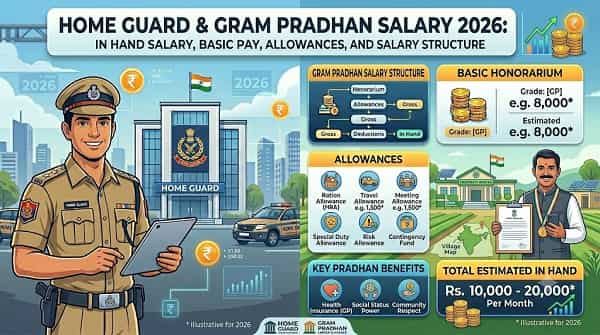
What Is a Gram Pradhan? Elected Representative, Not a Government Employee
This distinction matters enormously. A Gram Pradhan is an elected representative of the Gram Panchayat, chosen through a panchayat election held every five years. Unlike a Panchayat Secretary or a Block Development Officer — who are salaried government employees — the Gram Pradhan does not draw a regular government salary, grade pay, DA, HRA, or pension.
What the Pradhan receives is an honorarium — a fixed monthly amount set by the respective state government as a token acknowledgment of their public service role.
There is no DA revision. No HRA. No government housing. No pension after the term ends. No medical benefits under CGHS. The Gram Pradhan manages panchayat development funds, MGNREGA allocations, and PM Awas Yojana budgets — sometimes worth several crores annually — while drawing a fixed honorarium that is often less than the minimum wage for unskilled labour in some states.
Gram Pradhan Salary 2026: State-Wise Honorarium
Honorarium amounts are set by individual state governments and vary significantly across India.
| State | Gram Pradhan Monthly Honorarium (Approx.) |
| Uttar Pradesh | ₹5,000 |
| Bihar (Mukhiya) | ₹5,000 |
| Himachal Pradesh | ₹7,500 |
| Rajasthan (Sarpanch) | ₹7,500 |
| Odisha | ₹10,000 |
| Madhya Pradesh | ₹5,000 – ₹6,000 |
| Chhattisgarh | ₹4,000 – ₹5,000 |
| Uttarakhand | ₹4,000 – ₹5,000 |
| Maharashtra (Sarpanch) | ₹5,000 – ₹8,000 |
| Punjab | ₹6,000 – ₹8,000 |
In Uttar Pradesh, the honorarium was previously ₹3,500 per month and has been revised upward to ₹5,000. Bihar’s Mukhiya honorarium was similarly increased from ₹2,500 to ₹5,000 per month in a recent revision.
Meeting Allowance: The Additional Gram Sabha Payment
Beyond the fixed monthly honorarium, Gram Pradhans receive a per-meeting allowance for attending Gram Sabha meetings. In UP, this is approximately ₹500 per Gram Sabha meeting. Since Gram Sabhas are typically held four times a year (quarterly), this adds roughly ₹2,000 annually — a minimal supplement.
Gram Pradhan Annual Income in 2026
When combining the monthly honorarium, meeting allowances, and any state-specific supplements, the total annual income for a Gram Pradhan typically falls between ₹42,000 and ₹1,20,000 depending on the state and local provisions.
Panchayat Hierarchy: Comparative Honorarium Rates
Understanding the Gram Pradhan’s position within the full panchayat compensation structure helps put the numbers in context.
| Position | Monthly Honorarium (Approx.) |
| Gram Panchayat Member | ₹2,100 |
| Up-Pradhan (Deputy Head) | ₹5,100 |
| Gram Pradhan | ₹5,000 – ₹10,000 |
| Block Pramukh | ₹11,300 |
| Zila Parishad Member | ₹7,500 – ₹8,300 |
| Zila Parishad Chairperson | ₹15,500 – ₹25,000 |
These figures vary by state. The numbers above draw primarily from UP and Himachal Pradesh government notifications and are representative rather than universal.
What a Gram Pradhan Does NOT Receive
It is equally important to spell out what is absent from the package:
- No Dearness Allowance (DA)
- No House Rent Allowance (HRA)
- No government accommodation
- No official vehicle
- No Central Government Health Scheme (CGHS) coverage
- No National Pension System (NPS) contribution
- No gratuity after the 5-year term
- No income tax exemption certificate or Form 16
The Gram Pradhan often funds village events, hospitality for visiting officials, and minor community expenses from personal funds — an informal cost that comes with the position.
The Real Power Behind the Modest Honorarium
The financial compensation tells only part of the story. A Gram Pradhan exercises significant administrative and financial authority:
MGNREGA Fund Management — Controls allocation and implementation of rural employment guarantee work in the village, involving lakhs of rupees annually.
PM Awas Yojana — Supervises construction of rural housing under the national housing scheme.
Gram Panchayat Development Fund — The 15th Finance Commission has allocated substantial grants to gram panchayats for infrastructure — the Pradhan oversees utilisation.
Swachh Bharat Mission — Sanitation infrastructure at the village level runs through Pradhan approval.
Political Network — A Gram Pradhan builds direct working relationships with BDOs, SDMs, MLAs, and district administration officials — a foundation for political careers at higher levels.
Many former Gram Pradhans use the role as a launchpad for Block Pramukh, Zila Parishad, and eventually state assembly candidacy.
Panchayat Secretary vs Gram Pradhan: Key Difference
A common point of confusion is the distinction between the Gram Pradhan and the Panchayat Secretary (also called Gram Panchayat Adhikari or VPO in UP). The Panchayat Secretary is a salaried government employee, not an elected representative. In UP, under Pay Level 3 of the 7th Pay Commission, the Panchayat Secretary draws:
- Basic Pay: ₹21,700 – ₹25,500
- DA (approximately 50–60% of basic): ₹10,000 – ₹15,000
- HRA: ₹6,000 – ₹8,000
- In-Hand Salary: ₹25,000 – ₹35,000 per month
The Panchayat Secretary — who is subordinate to the Gram Pradhan in village hierarchy — earns significantly more in cash terms and receives full government employment benefits. This contrast illustrates that the Gram Pradhan’s role is about community authority and political engagement, not financial compensation.
Legal Responsibility and Risk
One aspect rarely discussed is the legal exposure that comes with the role. Gram Pradhans who authorise MGNREGA payments, PM Awas Yojana funds, or infrastructure work are personally accountable for proper utilisation. Cases of fund misuse — even inadvertent — can lead to FIRs, CBI or Vigilance inquiries, and criminal prosecution. This responsibility sits alongside an honorarium of ₹5,000 per month.
Conclusion
The Gram Pradhan salary in 2026 — typically ₹5,000 to ₹10,000 per month across most Indian states — is not, by any reasonable measure, compensation for the role’s actual scope of responsibility. It is a nominal honorarium attached to an elected public service position that carries substantial administrative authority, social influence, and political significance. For those who enter the role genuinely seeking to serve their village and build a political career, the value lies not in the monthly payment but in the platform, the network, and the community impact the position enables.
FAQs
Q: What is the Gram Pradhan salary per month in UP in 2026?
A: The Gram Pradhan in Uttar Pradesh receives a monthly honorarium of ₹5,000, revised upward from the earlier ₹3,500. This is not a salary in the government employee sense — there is no DA, HRA, or pension attached to it.
Q: Does a Gram Pradhan receive a pension after the 5-year term?
A: No. A Gram Pradhan is an elected representative and not a permanent government employee. There is no pension, NPS contribution, or post-term financial benefit.
Q: What is the difference between Gram Pradhan and Panchayat Secretary salary?
A: The Panchayat Secretary is a salaried government employee earning ₹25,000 to ₹35,000 per month in hand with full benefits. The Gram Pradhan, despite holding a higher position in village governance, receives only a nominal honorarium of ₹5,000 per month with no government employment benefits.
Q: Which state pays the highest Gram Pradhan honorarium in India?
A: Odisha currently pays one of the highest honorariums at approximately ₹10,000 per month. Himachal Pradesh and Rajasthan also offer ₹7,500 per month.
Q: Can a Gram Pradhan earn more than the stated honorarium?
A: The official honorarium is the only direct cash payment. Some Pradhans receive meeting allowances for Gram Sabha sessions. No additional official income is attached to the role.
 Saurav Mehra