 By Saurav Mehra
A boutique owner blocks a customer on WhatsApp the moment she asks about a return, pointing to a “No Refund” sign taped to the counter, genuinely believing that sign settles the matter legally. It doesn’t. Under India’s Consumer Protection (E-Commerce) Rules, 2020, a blanket “no refund under any circumstance” policy is itself an unfair trade practice and legally void, regardless of what any sign or website disclaimer claims. Yet the law isn’t quite as simple as “refunds are always mandatory” either — there’s a genuine, legally recognised difference between refusing a refund for buyer’s remorse versus refusing one for a defective product. Here’s exactly where that line sits.
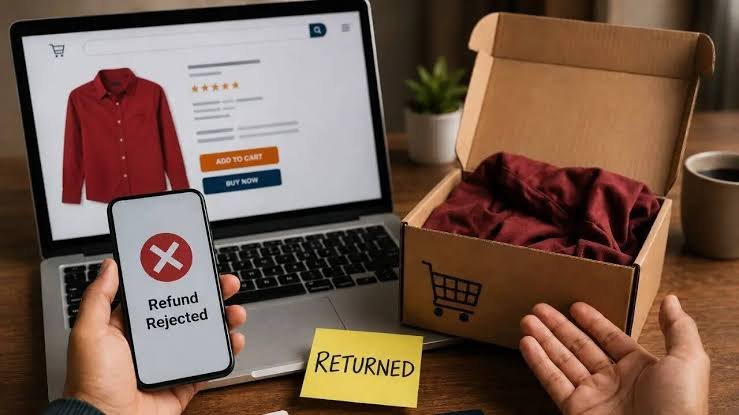
Can a Business Legally Refuse a Refund? The Nuanced Answer
Before covering the specific scenarios, it’s worth understanding that this question doesn’t have a single blanket answer, since the outcome genuinely depends on why the refund is being requested.
- Yes, a business can legally refuse a refund in certain circumstances, most commonly when a customer simply changed their mind after a genuinely satisfactory purchase
- No, a business cannot refuse a refund when the product is defective, damaged, significantly different from what was promised, or when there’s a genuine deficiency in the service provided
- A “No Exchange, No Return” policy displayed at a store or website is not automatically illegal, but it cannot override the statutory consumer protections built into Indian law
- The Consumer Protection Act, 2019 treats a refund not as a discretionary favour a business chooses to extend, but as an enforceable right in specific, legally defined circumstances
When a “No Refund” Policy Genuinely Holds Up
Understanding the situations where a business’s stated policy actually protects them helps set realistic expectations before assuming every refund request is automatically guaranteed.
- A seller can generally refuse a return or refund when a customer has simply changed their mind after purchasing a genuinely satisfactory, non-defective product
- Clearly disclosed “Non-Returnable” categories, such as innerwear, custom-made items, or certain electronics, are legally permitted as a general policy for buyer’s-remorse-based returns
- If the product genuinely matches what was advertised, functions correctly, and simply doesn’t suit the customer’s personal preference, businesses retain the right to decline a refund
- These policies work specifically because the Consumer Protection Act protects against genuine deficiencies and misrepresentation, not against a customer’s own change of heart on an otherwise satisfactory purchase
When a “No Refund” Policy Becomes Legally Void
This is where most businesses genuinely overreach, assuming their displayed policy grants blanket immunity from every refund request regardless of the underlying reason.
- Under Rule 4(11) of the Consumer Protection (E-Commerce) Rules, 2020, no seller can refuse to take back goods or refuse a refund if the goods are defective, deficient, spurious, or delivered late
- A blanket “No Refund under any circumstance” policy is explicitly treated as an unfair trade practice and is void under Indian consumer law
- Even products specifically designated as “Non-Returnable,” including electronics or custom items, must still be replaced or refunded if the actual item delivered is physically damaged, defective, or simply the wrong product
- Sellers cannot use a “Non-Returnable” label as a shield for knowingly selling broken, defective, or incorrect goods to consumers
What Counts as a “Deficiency” Under Consumer Law
This legal concept underpins nearly every legitimate refund claim, and understanding its genuinely broad scope clarifies why so many refund refusals don’t actually hold up.
- Section 2(11) of the Consumer Protection Act, 2019 defines “deficiency” broadly to cover any fault or shortcoming in how a service is performed
- If a seller promised something specific and simply failed to deliver it, that failure constitutes a legally recognised deficiency, entitling the consumer to pursue a refund
- This broad definition deliberately covers a wide range of scenarios, from a product not matching its description to a service being performed poorly or incompletely
- Consumers facing a refund refusal for what genuinely constitutes a deficiency can escalate their complaint to the relevant consumer commission, which has authority to order a refund regardless of the seller’s stated policy
Specific Refund Timelines for E-Commerce Purchases
Beyond simply being entitled to a refund, Indian law also sets concrete deadlines within which that refund must actually reach you once approved.
- Rule 5(3) of the Consumer Protection (E-Commerce) Rules, 2020 makes it a mandatory legal duty for e-commerce entities to process refunds within a reasonable period
- For card and UPI payments specifically, RBI’s harmonised turnaround time framework prescribes credit within five working days of return acceptance
- The absolute outer limit for any e-commerce refund, regardless of payment method, is capped at 14 days from the point the returned item is picked up or delivered back to the seller
- If a platform picks up your returned item but fails to credit your refund within this window, both the individual seller and the marketplace itself are considered in violation of these rules
Platform Fall-Back Liability on Marketplaces
This is a genuinely important protection for anyone shopping through Amazon, Flipkart, Meesho, or similar platforms, since it means you’re not left with nowhere to turn if an individual seller becomes unresponsive.
- E-commerce marketplaces carry a “fall back liability” under the 2020 Rules, meaning the platform itself can bear responsibility if an individual seller fails to fulfil legitimate refund obligations
- This protection exists specifically because marketplace sellers can sometimes become unresponsive or disappear entirely, leaving consumers with no direct recourse against the actual seller
- Consumers facing an unresponsive seller can escalate the complaint to the platform itself, rather than being left entirely dependent on that specific seller’s cooperation
- This structural protection is one of the key distinctions between shopping through an organised e-commerce marketplace versus an entirely independent online seller with no platform oversight
How to Escalate a Wrongfully Refused Refund
If a business genuinely refuses a legitimate refund, understanding the actual escalation path helps you pursue resolution effectively rather than simply accepting the refusal.
- Start by sending a clear written communication, ideally a formal notice, citing the specific rule the business is violating, whether Rule 4(11) or 5(3) of the E-Commerce Rules, or the broader deficiency provisions of the Consumer Protection Act
- If direct communication fails, file a complaint with the Central Consumer Protection Authority through the National Consumer Helpline or the e-Daakhil online portal
- For e-commerce specifically, writing to the platform’s designated Grievance Officer under the IT Rules, 2021 requires a mandatory response within 15 days
- A chargeback dispute filed with your credit card or UPI-linked bank offers a genuinely effective parallel route, since your bank can investigate and reverse the transaction if the seller’s refund refusal was unjustified
Why Businesses Genuinely Need to Get This Right
Beyond avoiding individual customer disputes, understanding these rules matters for businesses genuinely trying to maintain compliant, defensible refund practices.
- Displaying an overly broad “No Refund” policy exposes a business to being formally classified as engaging in an unfair trade practice under Section 2(47) of the Consumer Protection Act, 2019
- This classification carries genuine regulatory consequences beyond just losing an individual dispute, including potential Central Consumer Protection Authority scrutiny
- Businesses genuinely benefit from drafting refund policies that clearly distinguish between buyer’s-remorse returns, which can legitimately be restricted, and defect-based or misrepresentation-based refunds, which cannot
- Training customer-facing staff to recognise this distinction prevents the kind of blanket, unlawful refusal that escalates a routine customer complaint into a formal regulatory or legal dispute
Frequently Asked Questions
Q1. Can a shop legally refuse a refund just because they have a “No Refund” sign displayed at the counter?
Not entirely — the sign can validly restrict refunds for simple change-of-mind purchases, but it cannot override your right to a refund if the product is genuinely defective, damaged, or different from what was promised.
Q2. What should I do if an e-commerce platform picked up my return but hasn’t refunded my money after two weeks?
This violates Rule 5(3) of the Consumer Protection (E-Commerce) Rules, 2020, and you should escalate through the National Consumer Helpline, the e-Daakhil portal, or a chargeback dispute with your bank if the platform doesn’t respond.
Q3. Can a business refuse my refund by claiming the product I bought was listed as “Non-Returnable”?
Only for buyer’s-remorse returns — if the specific item delivered is physically damaged, defective, or the wrong product entirely, the “Non-Returnable” label cannot be used to avoid replacing it or issuing a refund.
Q4. Is there a time limit within which I need to request a refund for a defective product?
While specific timelines vary by seller and product category, requesting a refund promptly upon discovering the defect strengthens your case considerably, so it’s worth raising the issue as soon as you identify the problem rather than delaying.