 By Chetan Singh
 Every year, Indian Railways announces one of the largest government recruitment drives in the country — and Railway Group D consistently draws the most applications of any central government examination. The reason is straightforward: permanent employment with India’s largest government enterprise, a structured salary, medical benefits for the entire family, free railway passes, pension coverage, and a promotion path that can take a Track Maintainer to a supervisory role within a decade. The RRB has announced 22,195 Level-1 vacancies for the latest recruitment cycle, making 2026 one of the best years to target this examination.
This article covers the complete Railway Group D salary structure for 2026 — basic pay, every allowance, city-wise in-hand figures, deductions, and the full career progression.
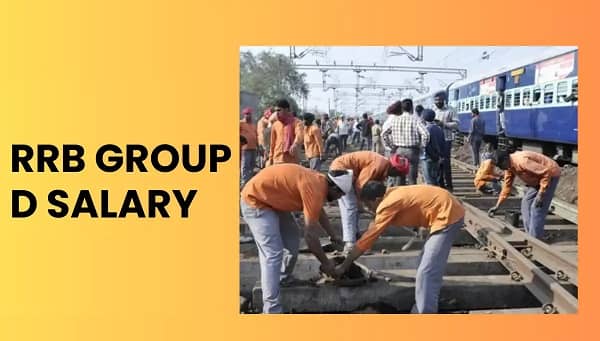
Railway Group D Salary 2026: Quick Overview
| Component | Details |
| Pay Level | Level 1 (7th Pay Commission) |
| Starting Basic Pay | ₹18,000 per month |
| Pay Scale | ₹18,000 – ₹56,900 |
| Gross Monthly Salary | ₹25,000 – ₹28,000 (city-dependent) |
| In-Hand Salary | ₹20,000 – ₹25,380 per month |
| Annual Package (Approx.) | ₹3.5 – ₹6 LPA |
| Probation Period | 2 years |
Railway Group D Posts Covered
The RRB Group D examination fills a wide range of Level-1 posts across Indian Railways’ seven major departments:
| Department | Posts Covered |
| Engineering | Track Maintainer Grade IV, Assistant Bridge |
| Mechanical | Assistant Workshop, Assistant Loco Shed/Diesel, Assistant (C&W) |
| Electrical | Assistant (TRD), Assistant (OHE), Assistant Signal Maintainer |
| Signal & Telecommunication | Assistant Signal Maintainer |
| Stores | Assistant (Depot) |
| Traffic | Assistant Pointsman |
| Medical | Hospital support roles |
Each post carries Level-1 basic pay (₹18,000), but specific job profiles, shift patterns, and operational allowances vary by department.
Railway Group D Pay Scale 2026
Under the 7th Central Pay Commission:
Pay Level 1: ₹18,000 – ₹56,900
Annual increment: 3 percent of basic pay each year. After 20 years of service through increments alone (without promotion), basic pay reaches approximately ₹32,000 to ₹35,000.
MACP (Modified Assured Career Progression) — If an employee does not receive a promotion within 10 years, they receive a financial upgrade to the next pay level. This ensures that even without formal promotion, the salary grows.
Railway Group D Salary Structure: All Components
Basic Pay
₹18,000 per month at joining. This is the anchor for all allowances.
Dearness Allowance (DA)
Revised twice yearly based on the All India Consumer Price Index. Currently approximately 50 percent of basic pay — adding ₹9,000 per month. This is revised automatically every January and July, providing salary increases without any promotion.
House Rent Allowance (HRA)
Varies by posting city:
| City Category | HRA Rate | Amount (₹18,000 Basic) |
| X (Metro) | 24% | ₹4,320 |
| Y (Large Cities) | 16% | ₹2,880 |
| Z (Smaller Towns) | 8% | ₹1,440 |
This is the railway-specific HRA rate — slightly different from the standard central government 27/18/9 percent structure used for other employees.
Employees allotted railway quarters (which are available at most major railway stations and yards) receive nominal HRA instead of market-rate HRA — but railway quarters represent significant practical value, particularly in major cities.
Transport Allowance (TA)
A fixed monthly component for commuting. Varies by city and rank. For Level-1 employees:
- X-category cities: ₹900 per month (plus DA on TA)
- Other cities: Varies based on specific allowance notifications
Night Duty Allowance
Group D employees, particularly those working on track maintenance, signal operations, and train movement roles, frequently perform night shifts. Night duty allowance is paid for hours worked between 22:00 and 06:00, adding to monthly income in high-frequency rosters.
Overtime Allowance
Payable for work beyond standard duty hours, particularly relevant for operational roles in maintenance and traffic departments.
Running Allowance
Applicable to employees in operational running departments — not universal but significant where applicable.
City-Wise Railway Group D Gross and In-Hand Salary 2026
| City Type | Basic | DA (50%) | HRA | TA | Gross | Deductions | In-Hand |
| X (Metro) | ₹18,000 | ₹9,000 | ₹4,320 | ₹900 | ₹32,220 | ₹4,000 – ₹6,000 | ₹23,000 – ₹25,380 |
| Y (Large City) | ₹18,000 | ₹9,000 | ₹2,880 | ₹900 | ₹30,780 | ₹4,000 – ₹5,500 | ₹22,000 – ₹24,000 |
| Z (Other) | ₹18,000 | ₹9,000 | ₹1,440 | ₹900 | ₹29,340 | ₹3,800 – ₹5,000 | ₹20,000 – ₹22,500 |
Note: Some sources report higher gross figures of ₹27,920 (X-city) when DA is calculated at current rates. The in-hand range of ₹20,000 to ₹25,380 across all sources represents the actual credited amount after deductions.
Standard Deductions from Railway Group D Salary
| Deduction | Amount (Approx.) |
| NPS Contribution (10% of basic + DA) | ₹2,700 – ₹3,000 |
| Professional Tax | ₹200 |
| Group Insurance Scheme | ₹30 – ₹100 |
| Income Tax | Nil for most (below taxable limit) |
| Total Deductions | ₹2,930 – ₹3,300 |
Most Railway Group D employees fall well below the ₹12 lakh income threshold under the new tax regime, meaning income tax is zero or minimal at entry level.
Railway Group D Salary After 5, 10 and 20 Years
Annual 3 percent increments compound steadily. MACP benefits ensure even non-promoted employees see pay level upgrades at 10-year intervals.
| Stage | Basic Pay (Approx.) | Estimated In-Hand |
| At Joining | ₹18,000 | ₹20,000 – ₹25,380 |
| After 3 years | ₹19,667 | ₹23,000 – ₹27,000 |
| After 5 years | ₹20,887 | ₹25,000 – ₹29,000 |
| After 10 years (MACP to Level 2) | ₹19,900 → Level 2 | ₹30,000 – ₹35,000 |
| After 10 years (promoted to Group C) | Level 2 + | ₹32,000 – ₹40,000 |
| After 20 years | Senior/Supervisory | ₹45,000 – ₹60,000+ |
Railway Group D Benefits Beyond Monthly Salary
Free Railway Passes
This is one of the most genuinely valuable benefits in Indian employment. Railway Group D employees and their families receive free passes for travel on Indian Railways — unlimited first-class passes for the employee and annual passes for dependents. The annual value for a family travelling regularly can easily exceed ₹50,000 to ₹1 lakh in travel equivalent.
Privileged Ticket Orders (PTOs)
For travel beyond the scope of free passes — additional concessional tickets at minimal cost.
Medical Facilities
Comprehensive medical care at Railway hospitals (there are over 125 Railway hospitals across India with speciality and super-speciality facilities) for the employee and all dependents. This is essentially equivalent to private hospitalisation coverage, at zero additional cost.
National Pension System (NPS)
Employees recruited after 2004 contribute 10 percent of basic pay monthly, with the Railway department matching with 14 percent — building a substantial retirement corpus.
Subsidised Railway Quarters
Most major railway yards, workshops, and station complexes have attached staff colonies. Group D employees are entitled to apply for quarters — subsidised railway accommodation that effectively eliminates private rent in cities where railways have an established presence.
Leave Entitlements
- 30 days earned leave per year
- 12 days casual leave per year
- 30 days medical leave (half-pay leave)
- Maternity leave (26 weeks) and paternity leave (15 days) as per central government norms
Leave Encashment
Accumulated earned leave can be encashed at retirement — potentially a lump-sum of ₹3 to ₹5 lakh depending on service length and final basic pay.
Career Growth and Promotion in Railway Group D
Indian Railways offers one of the most well-structured promotion systems among all central government departments:
| Stage | Timeline | Route |
| Group D (Level 1) | At Joining | |
| Group D with MACP (Level 2) | After 10 years (if not promoted) | Automatic |
| Group C (Level 2) | After 3 years of regular service | Departmental exam (100 marks) |
| Technician / Junior Engineer (Level 5-6) | After Group C promotion + seniority | Further departmental exams |
| Senior Technician / SSE | 8-15 years total service | Merit + seniority |
| Supervisory Roles | Long-service track | Internal exams |
The departmental examination for promotion to Group C carries 85 marks for the written test and 15 marks for service record and official conduct — a transparent, merit-based system.
Railway employees who systematically appear for departmental exams can realistically progress from Track Maintainer at ₹18,000 basic pay to Technician at ₹29,200 within 8 to 10 years — a significant salary step-up.
RRB Group D 2026: Latest Recruitment Details
The RRB has announced 22,195 vacancies for Group D Level-1 posts under CEN 08/2024 in the latest recruitment cycle. The selection process involves:
- Computer Based Test (CBT) — General Science, Mathematics, General Intelligence & Reasoning, General Awareness
- Physical Efficiency Test (PET/PST) — Running, weight carrying, and physical measurement standards
- Document Verification
- Medical Examination — Visual standards including distance vision 6/9 and 6/9 with or without glasses, colour vision, binocular vision, and night vision tests
The 2-year probation period follows selection, during which the employee undergoes training and is evaluated before confirmation.
8th Pay Commission: Expected Impact on Group D Salary
Based on an anticipated fitment factor of approximately 2.28:
- Starting basic pay could rise from ₹18,000 to approximately ₹41,000 to ₹46,000
- In-hand salary at entry could rise to approximately ₹55,000 to ₹65,000 per month
- DA resets to zero on implementation and begins accruing on the new base
Until the 8th CPC is officially notified and implemented, 7th CPC rates remain in effect.
Railway Group D vs SSC MTS: Key Comparison
Both are Level-1 posts with identical basic pay of ₹18,000. The differences:
| Feature | Railway Group D | SSC MTS |
| Basic Pay | ₹18,000 | ₹18,000 |
| In-Hand (Metro) | ₹23,000 – ₹25,380 | ₹23,500 – ₹28,000 |
| Free Railway Passes | Yes (major benefit) | No |
| Railway Quarters | Available | Not applicable |
| Job Profile | Physical / operational | Office / clerical |
| Medical | Railway hospitals | CGHS |
| Promotion | Departmental exam after 3 years | Departmental exam path |
Free railway passes and subsidised accommodation make Railway Group D more attractive in total benefit terms despite nearly identical cash salaries.
Conclusion
Railway Group D salary in 2026 starts at ₹18,000 basic pay and translates to ₹20,000 to ₹25,380 in-hand monthly depending on posting city. The absolute cash figure is modest, but the total package — free railway passes for the entire family (worth ₹50,000 to ₹1 lakh annually), Railway hospital medical coverage, subsidised accommodation in railway colonies, NPS pension with 14 percent government contribution, 30 days earned leave with encashment benefits, and a structured promotion ladder to Group C and beyond — makes this one of the most comprehensive entry-level government employment packages in India. For candidates seeking permanent government employment after Class 10 or ITI, Railway Group D offers both immediate stability and meaningful long-term career growth.
FAQs
Q: What is the Railway Group D in-hand salary per month in 2026?
A: After deductions, the net in-hand salary ranges from approximately ₹20,000 in smaller Z-category city postings to ₹25,380 in X-category metro city postings. The variance is primarily driven by the HRA component.
Q: What is the starting basic pay for Railway Group D?
A: The starting basic pay is ₹18,000 per month at Pay Level 1 of the 7th Central Pay Commission pay matrix. Annual increment of 3 percent increases this each year.
Q: What is the HRA for Railway Group D employees?
A: Railway Group D HRA rates are 24 percent (X-category cities), 16 percent (Y-category), and 8 percent (Z-category) of basic pay — slightly different from the standard central government HRA structure.
Q: Can Railway Group D employees get promoted to Group C?
A: Yes. After 3 years of regular service, Group D employees are eligible to appear for departmental promotion examinations for Group C posts. The exam carries 100 marks (85 written + 15 for service record). Successful candidates move to Level 2 or higher with a significant salary increase.
Q: What is the biggest non-salary benefit for Railway Group D employees?
A: Free railway passes for the employee and family — allowing unlimited Class 1 travel on Indian Railways. For a family that travels regularly across India, the annual value of this benefit can easily exceed ₹50,000 to ₹1 lakh.
 Saurav Mehra