 By Saurav Mehra
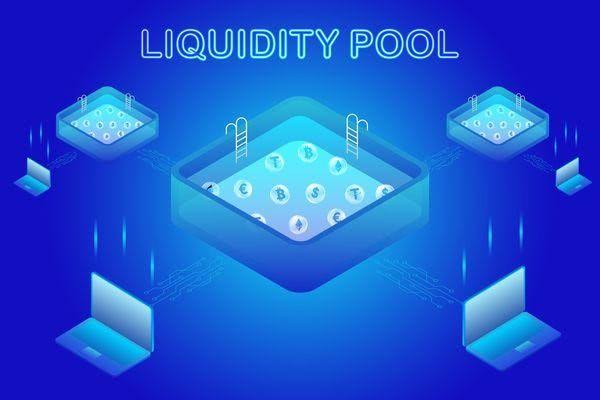
Liquidity pools are the engine underneath nearly every decentralized exchange, replacing the buyers-and-sellers order book that traditional trading relies on with something entirely different: a smart contract holding reserves of two or more tokens, priced algorithmically by a fixed mathematical formula. There’s no matching engine looking for a compatible counterparty. There’s just math, executed automatically, every single time someone trades.
| Quick Facts | Details |
| Core mechanism | Automated Market Makers (AMMs) — algorithmic pricing instead of an order book |
| Most common pricing formula | Constant product: x × y = k |
| Introduced by | Uniswap V1 (2018), formalized in Uniswap V2 (2020) |
| Uniswap V3’s key upgrade | Concentrated liquidity — LPs can focus capital within a chosen price range |
| Proof of your deposit | LP (liquidity provider) tokens representing your proportional pool share |
| Where the pool’s price comes from | The ratio between the two token reserves, not an external feed |
Here’s a concrete example that shows exactly why liquidity pools behave so differently from a traditional order book: imagine a pool holding 10,000 USDC and 100 ETH, priced at exactly $100 per ETH. If you want to buy 10 ETH, you might expect to pay $1,000. Because of the constant product formula, you actually need to pay roughly $1,111.11 — an average price of $111.11 per ETH, representing 11.11% slippage purely from the mechanics of the pool itself, before considering any external market conditions at all. That’s not thin liquidity in the order-book sense; it’s the mathematical shape of the pricing curve reacting to the size of your trade relative to the pool.
What a Liquidity Pool Actually Is
Stripped to its essentials, a liquidity pool is genuinely simple in concept, if not in its underlying math.
- A liquidity pool is a smart contract holding reserves of two (or sometimes more) different tokens
- Anyone can deposit an equivalent value of both tokens into the pool, becoming a liquidity provider
- Traders swap directly against the pool’s reserves rather than against another individual trader’s order
- The pool’s current price is derived entirely from the ratio between its two token reserves, recalculating automatically after every single trade
- This design enables continuous, 24/7 trading without needing a matched counterparty for every transaction, something an order book fundamentally requires
The Constant Product Formula: x × y = k
This is the mathematical rule that most major AMMs, including Uniswap’s original design, are built around.
- The formula states that the product of the two reserve quantities, x and y, must remain constant (k) before and after every trade
- If a trader buys token Y using token X, they deposit X into the pool and receive Y out — but the reserve of Y must decrease in exactly the amount that keeps x × y equal to the same constant k
- As one reserve shrinks, the price of that token rises within the pool, since it’s now relatively scarcer compared to the other token
- This is a purely mechanical, algorithmic process — no human, order book, or external price feed sets the pool’s internal price at any given moment
- The formula plotted graphically forms a hyperbola, meaning price moves increasingly sharply as a trade consumes a larger share of one side’s reserves
Why Trade Size Alone Causes Slippage
Understanding this mechanic explains why even a “full” liquidity pool can produce meaningful slippage that has nothing to do with thin order book depth.
- Because the pricing curve is a hyperbola, small trades relative to the pool’s total size cause minimal price impact
- Larger trades relative to pool size cause disproportionately larger price impact, since the curve steepens sharply as reserves become more imbalanced
- In the earlier example, buying 10 ETH from a 100 ETH pool represents 10% of the pool’s ETH reserves — a genuinely large trade relative to pool size, which is precisely why the effective price moved so much
- The same trade executed against a much larger pool — say, one holding 10,000 ETH instead of 100 — would produce dramatically less slippage, since 10 ETH would represent a far smaller fraction of total reserves
- This is why deep liquidity pools matter enormously for large trades, and why traders splitting a large order across multiple smaller trades (or multiple pools) can reduce total slippage compared to executing it all at once
LP Tokens: Proving Your Share of the Pool
When you deposit into a pool, you don’t just hand over your tokens and hope for the best — you receive proof of your position.
- Depositing tokens proportionally into a pool mints you LP tokens, representing your fractional ownership of that pool’s total reserves
- These LP tokens can later be redeemed for your proportional share of whatever the pool’s reserves happen to be at that time
- Because trading activity constantly shifts the reserve ratio, what you redeem may not match what you originally deposited in exact token amounts — this reserve shift is the underlying mechanism behind impermanent loss
- LP tokens themselves are often transferable and can sometimes be used elsewhere in DeFi, such as being deposited into a separate yield-generating vault for additional rewards on top of base trading fees
Concentrated Liquidity: Uniswap V3’s Efficiency Upgrade
The original constant product design has one significant inefficiency that later AMM versions specifically set out to fix.
- In the original model, liquidity gets spread evenly across the entire possible price range, from zero to infinity — including price levels the asset will almost certainly never reach
- This means most deposited capital in a traditional pool sits idle, never actually used to facilitate trades at the prices where activity actually happens
- Uniswap V3 introduced concentrated liquidity, letting liquidity providers choose a specific price range within which to deposit their capital
- Within that chosen range, the position behaves similarly to the original constant product formula, but with dramatically improved capital efficiency, since funds aren’t wasted on unreachable price levels
- The trade-off: if the market price moves outside an LP’s chosen range, that position stops earning trading fees entirely and effectively becomes a single-sided holding of whichever token remains, until the price moves back into range or the LP manually adjusts it
Other Pool Types Beyond Simple 50/50 Pairs
Not every liquidity pool uses the standard constant product formula or a simple two-token, equal-weight structure.
- Stable swap pools (used by platforms like Curve) use a modified formula specifically optimized for assets expected to trade near the same value, like different stablecoins, dramatically reducing slippage for these low-volatility pairs
- Weighted pools (used by platforms like Balancer) allow unequal weightings between assets — for instance, an 80/20 split rather than a standard 50/50 — and can support more than two tokens in a single pool
- Hybrid models blend elements of different formulas, aiming to balance capital efficiency with protection against a pool being fully drained by an opportunistic large trade
How Liquidity Providers Actually Earn
Providing liquidity isn’t charity — it’s a service that generates real revenue for the people supplying it.
- Every trade executed against a pool pays a small fee, typically a fraction of a percent, distributed proportionally to liquidity providers based on their share of the pool
- On high-volume pools, these accumulated trading fees can represent meaningful returns over time
- Some protocols layer additional token incentives on top of base trading fees, further boosting the effective yield for liquidity providers, though often at the cost of exposure to that incentive token’s own price volatility
- Returns must be weighed against impermanent loss risk, since a pool’s rebalancing mechanic can leave a liquidity provider with less value than they’d have had simply holding the two tokens separately
This is general educational information about liquidity pool mechanics, not investment advice. Providing liquidity carries genuine risk, including impermanent loss and smart contract risk, and independent research is essential before depositing funds into any pool.
FAQs
Q1. Why did my trade execute at a worse price than the pool’s quoted rate?
This is slippage caused by the constant product formula itself — larger trades relative to the pool’s total size move the price mechanically, regardless of how “deep” the pool otherwise appears.
Q2. What’s the difference between Uniswap V2 and V3 liquidity pools?
V2 spreads liquidity evenly across all possible prices, including ones that will never be reached, while V3 lets providers concentrate capital within a specific price range for much greater capital efficiency.
Q3. What happens if the price moves outside my concentrated liquidity range on Uniswap V3?
Your position stops earning trading fees and effectively becomes a single-sided holding of one token until the price returns to your chosen range or you manually adjust the position.
Q4. Why do stablecoin pools use a different formula than standard token pairs?
Stable swap formulas are optimized for assets expected to trade near the same value, significantly reducing slippage compared to the standard constant product formula used for volatile pairs.
Q5. Do larger liquidity pools always mean lower slippage for the same trade?
Generally yes. A trade representing a smaller fraction of a pool’s total reserves causes proportionally less price impact than the same trade against a smaller pool.
Q6. Is providing liquidity to a pool a safe way to earn passive income?
Not without real risk. Liquidity providers face impermanent loss from reserve rebalancing and smart contract exploit risk, both of which can outweigh earned trading fees under certain market conditions.